


Why structured learning and capability-led progression are essential for a senior risk management career
What it Really Takes to Build a Senior Risk Management Career
The expectations from risk professionals have changed fundamentally over the last decade. A senior risk management career today extends far beyond technical risk identification or regulatory compliance. Senior risk leaders are expected to:
- Advise boards and executive management on enterprise risk exposure
- Integrate governance, risk, and compliance across business units
- Oversee operational, digital, and emerging risks
- Align risk strategy with organizational objectives and resilience goals
Despite this shift, many professionals struggle with a critical question that directly impacts their senior risk management career: What should I learn, and in what order, to move into a senior risk leadership role?
Without clarity, professionals often pursue disconnected certifications that do little to prepare them for enterprise or board-level responsibilities. A senior risk management career requires structured, capability-driven learning built with long-term purpose.
Also Read: Risk Management Lessons from 2025: What Organizations Must Carry into 2026
Why a Senior Risk Management Career Requires a Structured Learning Path
Most professionals do not begin their careers in senior risk roles. They enter risk management through feeder functions such as:
- Credit and financial risk analysis
- Audit and regulatory compliance
- Operations and process management
- Insurance, claims, or underwriting
- IT, cybersecurity, or data governance
While these roles provide valuable depth, a senior risk management career demands breadth across the enterprise. Senior risk leaders must demonstrate capability in:
- Enterprise risk management frameworks
- Governance structures and board engagement
- Operational resilience and crisis response
- Digital, third-party, ESG, and emerging risk domains
Without a structured learning path, professionals remain siloed, delaying their readiness for senior risk roles. Intentional learning ensures that capability expands horizontally before moving into strategic leadership.
Start a Senior Risk Management Career with Capability Assessment, Not Courses
A common mistake in building a senior risk management career is enrolling in advanced programs without understanding current capability gaps. Effective progression begins with structured self-assessment.
Before selecting learning programs, professionals should evaluate:
- Their current role scope and industry exposure
- Understanding of enterprise risk and governance frameworks
- Experience across operational and digital risk areas
- Exposure to senior management or board-level discussions
- Available time and capacity for sustained learning
This assessment clarifies strengths, highlights critical gaps, and defines a realistic roadmap for a senior risk management career. Learning becomes focused, sequential, and aligned with leadership expectations.
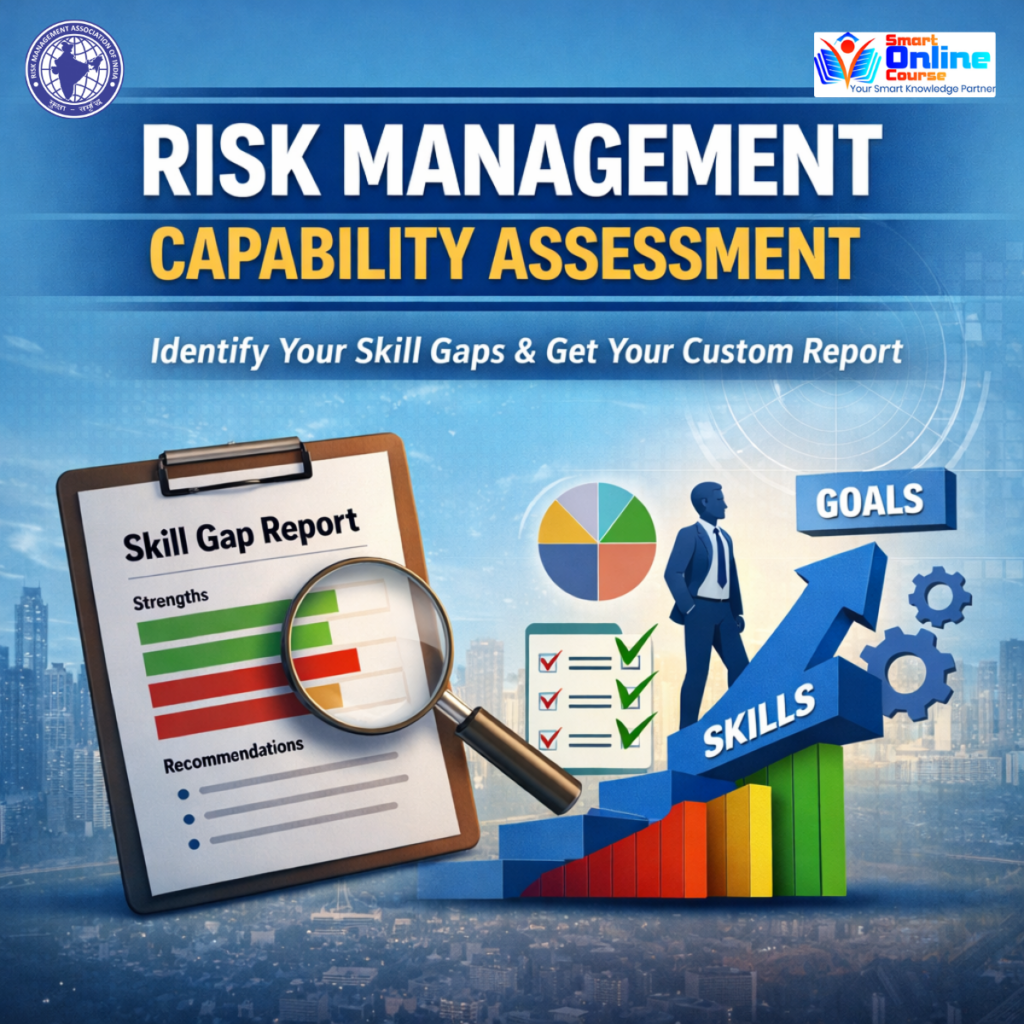
Fill out the form to get your Risk Management Skills Assessment & Personalized Learning Pathway
Senior risk roles demand evidence of capability, not course accumulation. RMAI’s Risk Management Capability Assessment enables professionals to objectively benchmark their current risk maturity, identify priority gaps, and define a targeted learning pathway aligned to enterprise and leadership expectations.
The Three-Phase Learning Pathway for a Senior Risk Management Career
Phase 1: Foundation – Governance and Enterprise Risk
Objective: Build the core knowledge required for a senior risk management career.
Focus areas include:
- Governance, Risk, and Compliance fundamentals
- ISO 31000 risk management principles
- COSO Enterprise Risk Management framework
- Risk appetite, culture, and enterprise reporting
Outcome:
The ability to understand and design enterprise risk frameworks aligned with global standards, forming the foundation of a senior risk management career.
Phase 2: Application – Operational and Digital Risk
Objective: Translate frameworks into practical execution.
Focus areas include:
- Operational risk identification and control design
- Incident management and root cause analysis
- Third-party and vendor risk management
- Business continuity planning and crisis response
Outcome:
Hands-on capability to manage real-world risk events and regulatory expectations, a critical requirement for advancing a senior risk management career.
Phase 3: Advanced and Strategic Risk Leadership
Objective: Prepare for executive and board-facing responsibilities.
Focus areas include:
- Technology, data, and AI risk
- ESG and sustainability risk integration
- Emerging, geopolitical, and systemic risks
- Board-level risk governance and executive communication
Outcome:
Strategic risk perspective and leadership confidence required for a mature senior risk management career.
Also Read: How Risk Management Professionals Can Earn PMI PDUs Through Structured Online Learning
How RMAI Supports Structured Learning Pathways Across Risk Domains
Risk management is not a one-size-fits-all discipline. The competencies required vary significantly across banking, NBFCs, financial services, insurance, consulting, governance, and emerging technology domains. Recognizing this diversity, the Risk Management Association of India supports structured learning pathways aligned to specific sectors, roles, and risk maturity levels, ensuring professionals build capabilities that are relevant to their operating environment and career objectives rather than pursuing generic or disconnected learning.
Rather than promoting generic learning, RMAI enables professionals to build risk capabilities aligned with the sector, role, and maturity level they operate in.
Risk Management in Banking & NBFCs
Structured pathways focusing on credit, market, and operational risk frameworks, regulatory expectations, capital adequacy, and enterprise-wide risk ownership.
Risk Management in Financial Services & Insurance
Learning pathways designed to strengthen risk judgment across underwriting, operations, portfolio risk, regulatory compliance, and customer protection.
Risk Management for Consultants & Advisory Professionals
Pathways that build multi-industry risk frameworks, risk diagnostics, maturity assessments, and board-level risk advisory capabilities.
Technology, AI, and Emerging Risk Domains
Focused learning on artificial intelligence risk, cybersecurity, data governance, and the ethical and regulatory implications of emerging technologies.
Governance, Risk & Compliance (GRC)
Integrated pathways covering governance structures, risk oversight, internal controls, and regulatory compliance aligned with organizational accountability.
Building a Senior Risk Management Career with Purpose
A senior risk management career is not achieved by chasing credentials or reacting to industry trends. It is built by identifying gaps, following a structured learning pathway, and developing enterprise-wide and strategic risk capability over time.
Professionals who learn with purpose progress faster, contribute more effectively, and are better prepared for leadership and board-level roles.
For those committed to building a sustainable senior risk management career, Smart Online Course, in association with Risk Management Association of India (RMAI), provide guided, assessment-led learning pathways provide a clear and credible route from capability building to leadership readiness.
Click Here → Risk Management Courses