Non-Performing Assets (NPAs) rarely emerge suddenly. They develop gradually through early warning signals, weak monitoring discipline, delayed classification, and governance gaps. Recognising stress early and managing it effectively is critical to protecting asset quality and maintaining financial stability.
This 7-hour practical course on NPA Management & Stressed Asset Governance equips professionals with the skills to detect early stress signals, apply disciplined SMA classification, strengthen monitoring workflows, and manage restructuring and recovery processes with governance clarity.
The course explains behavioural, business, and cash-flow indicators of stress, along with practical SMA tagging discipline and common misclassification risks. Participants learn how to implement structured monitoring workflows, track covenants, analyse borrower performance, and document monitoring notes in a defensible manner.
The program also covers restructuring governance, prevention of evergreening practices, ethical recovery processes, legal escalation awareness, and performance tracking of stressed portfolios.
Using real-world case patterns and practical tools, the course builds the capability to manage stressed assets proactively, maintain transparency, and strengthen governance across the credit lifecycle .
Why this Course?
Many NPAs arise not due to sudden defaults, but because early warning signals are ignored, SMA classification is delayed, monitoring is weak, and governance discipline is compromised.
Without structured monitoring, timely escalation, and strong documentation practices, institutions face rising NPAs, regulatory scrutiny, and erosion of portfolio quality.
What You’ll Learn
- Early stress recognition using behavioural and cash-flow indicators
- SMA classification logic and tagging discipline
- Monitoring workflow, covenant tracking and review mechanisms
- Identifying misclassification and evergreening practices
- Structuring and evaluating restructuring decisions
- Recovery and collections governance with ethical discipline
- Legal escalation awareness and documentation requirements
- Tracking recovery performance and ageing of defaults
- Governance oversight and transparent portfolio reporting
Key Details
Duration: 7 Hours
Format: Online | Self Paced | 100% Flexible & Accessible Anytime
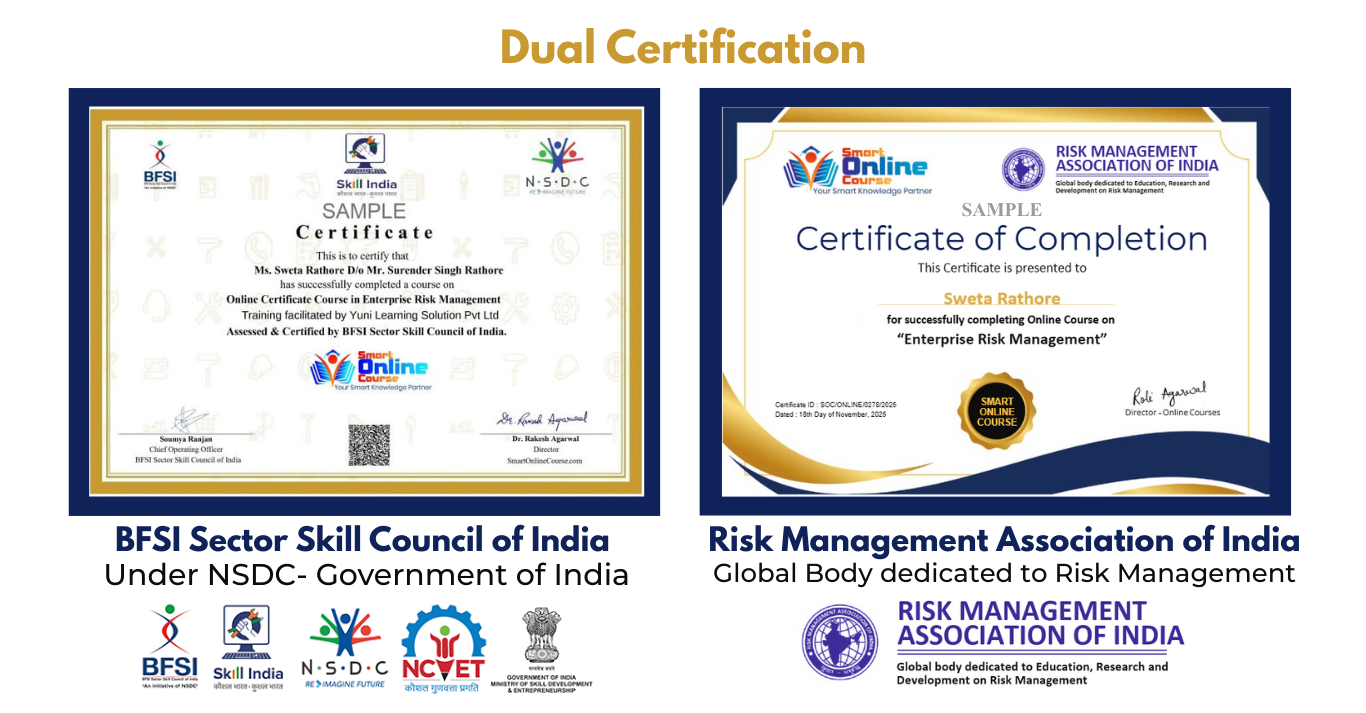
Dual Certification: Issued by Risk Management Association of India, Smart Online Course + BFSI Sector Skill Council of India

Get the complete training program details which includes:
- Career benefits and practical applications of the course
- Complete program details, eligibility, and enrollment information
Who Should Enroll
- Credit monitoring and risk management teams
- Relationship managers and branch credit heads
- Recovery and collections professionals
- Credit operations and support teams
- Internal audit and compliance professionals
- Banking and NBFC professionals managing loan portfolios
Course Format & Duration
- 7 hours of structured expert-led learning
- Real case-based stressed asset scenarios
- Practical monitoring and recovery frameworks
- Certificate of Completion included
Why This Course Is Unique
- Focuses on early stress detection, not just NPA handling
- Strong emphasis on SMA discipline and monitoring governance
- Covers restructuring, recovery and legal escalation in one framework
- Practical tools for portfolio tracking and documentation defensibility
- Designed specifically for banking and credit professionals
Skills You Will Gain
By completing this course, you will:
- Identify early stress signals and apply SMA classification frameworks
- Monitor loan performance, covenant compliance, and portfolio health
- Manage loan restructuring and rehabilitation processes effectively
- Handle collections, recovery strategies, and legal escalation procedures
- Understand regulatory requirements for stressed asset management
- Strengthen reporting, governance, and credit monitoring practices
Accelerate your growth with Dual Certification