
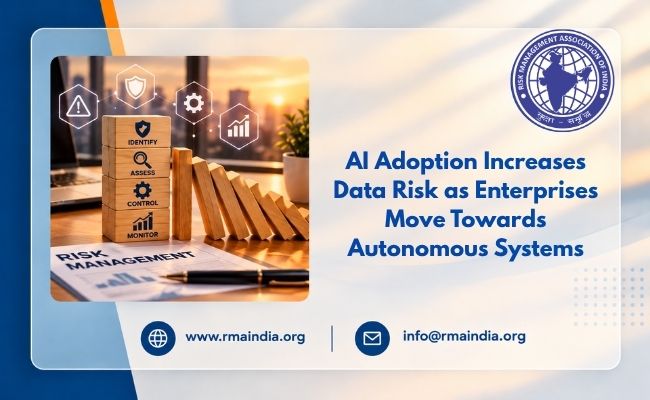
AI Adoption Increases Data Risk as Enterprises Move Towards Autonomous Systems

The rapid adoption of artificial intelligence is changing how organisations manage data risk, with enterprises moving from AI copilots towards increasingly autonomous AI systems. The transition is creating new challenges around data access, security, governance and accountability. AI copilots typically Read More …

Thales Strengthens Data Security Posture Management for AI Risks

Thales has announced enhancements to its Data Security Posture Management (DSPM) capabilities to address emerging data-security risks associated with artificial intelligence. The company said the expanded capabilities are designed to help organisations identify and manage sensitive data exposure as AI Read More …

98% of Data Loss Risk Linked to Human Behaviour

Living Security’s 2026 State of Human Risk Report highlights the significant role of human behaviour in organisational data-loss exposure. The report examines how employee actions, identity risks and security behaviours contribute to data-loss incidents, arguing that organisations need to move Read More …

Cybersecurity Emerges as the Leading Risk Concern for Businesses

Cybersecurity has emerged as the largest risk facing companies, according to a recent survey conducted by consulting and advisory firm BDO. As organizations accelerate digital transformation and increase reliance on connected technologies, concerns over cyberattacks, data breaches, ransomware, and operational Read More …

KnowBe4 Launches ‘Agent Risk Manager’ to Address Human-Centric Cyber Risks

KnowBe4 has introduced ‘Agent Risk Manager’, a new solution designed to identify and manage human-related cybersecurity risks within organisations, reflecting a growing focus on the human element in cyber defence strategies. According to the report, the platform evaluates user behaviour, Read More …

ISO/IEC 27001:2022 – Strengthening Information Security Frameworks

The ISO/IEC 27001:2022 framework represents a globally recognised standard for managing information security risks and protecting organisational data through a structured approach. According to the overview, ISO/IEC 27001:2022 provides guidelines for establishing, implementing, maintaining, and continually improving an Information Security Read More …

Managing digitalisation risks in the health and care sector

The rapid digitalisation of the health and care sector is transforming the way services are delivered, but it is also introducing a complex new set of risks that insurers, providers, and policymakers can no longer ignore. From electronic health records Read More …

New partnership aims to strengthen hospital risk management through advanced data and analytics

Quantum AI Research and the National Institute for Healthcare Data Security (NIHDS) have announced a strategic partnership designed to help hospitals and healthcare providers strengthen their risk-management frameworks amid rising cybersecurity threats and operational vulnerabilities. The collaboration comes at a Read More …

The Importance of Internal Controls in Risk Reduction – A Resilience-Driven Business Framework

Why Internal Controls Are Your First Line of Defense Risk is everywhere—financial fraud, data breaches, non-compliance, and operational lapses. Without internal controls, companies are flying blind. These systems form the backbone of corporate resilience, helping detect and deter potential issues Read More …

Cyber Risk Management: Frameworks and Best Practices You Can’t Afford to Ignore

One wrong click. That’s all it takes. An employee opens a phishing email. In hours, your customer data is compromised. Within days, you’re facing a media storm, a system shutdown, and a public apology. Cyber risk is no longer just Read More …