RBI Fraud Risk Management Guidelines 2026: Key Requirements, EWS Framework and Compliance Checklist for Banks

Fraud risk in banking is no longer limited to forged loan documents or isolated employee misconduct. Digital transactions, complex borrower structures, mule accounts, manipulation of financial information and weaknesses in internal controls create multiple opportunities for fraudulent activities. For banks, Read More …

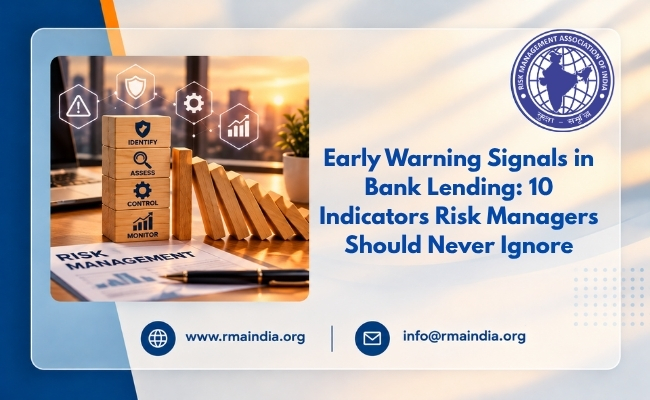
Early Warning Signals in Bank Lending: 10 Indicators Risk Managers Should Never Ignore

A borrower rarely becomes a serious credit risk overnight. In most cases, the warning signs begin appearing much earlier—in financial statements, account transactions, repayment behaviour or business operations. The challenge for banks is recognising these signals before a manageable problem Read More …

S&P Global Outlines Four-Pillar Model for Modernising Credit Risk Management

Commercial banks can strengthen credit decision-making by connecting credit monitoring, risk measurement, stress testing and problem-loan recovery within a single end-to-end workflow, according to an April 28, 2026 case study from S&P Global Market Intelligence. The analysis argues that fragmented Read More …

RBI Fraud Risk Management Directions 2026: 7 Timelines Banks Must Track

RBI Fraud Risk Management Directions 2026: 7 Timelines Banks Must Track

The Reserve Bank of India’s Fraud Risk Management Directions, 2026 significantly strengthen the responsibilities of commercial banks, including Small Finance Banks, across the complete fraud risk lifecycle, from early detection through classification, reporting, and post fraud credit decisions. For risk, Read More …

Corporate Fever: Why Organizations Must Escalate Risk Before Crisis

In medicine, fever is often perceived as a symptom to be suppressed. Yet biologically, fever serves an important purpose. When bacteria or viruses enter the human body, the immune system responds by raising the body’s temperature. This increase in temperature Read More …